CURRENT CONDITIONS
Updated
-
Today's Outlook
-
Visibility
-
Snow (cm)24h3day7day
-
Conditions
-
Base (cm)BottomTop
-
Lifts open
-
Runs (%)
-
Temperature (°C)CurrentFeels Like
-
Road
-
Wind (km/h)
-
Barometric Pressure
Popular Posts
25 Things to Do in Hakuba Off the Slopes
An Overview of Hakuba Day Trips Hakuba offers much more than world class skiing. [...]
The Area Unite Film Festival Returns This October
This year’s two day event is taking place at Hakuba Goryu on the 17th and [...]
The 24th Hakuba International Music Festival Returns This July
The Hakuba International Music Festival returns for its 24th edition, run [...]

Midori Komai Farewell Concert
This September, a pioneering conductor returns to her roots in the Hakuba mounta [...]
A New Chapter for Hotel La Neige
Hotel La Neige will temporarily close on June 15 to begin a multi-phase renovati [...]
June 25, 2021

The Ultimate Guide to Japanese Snow Monkeys
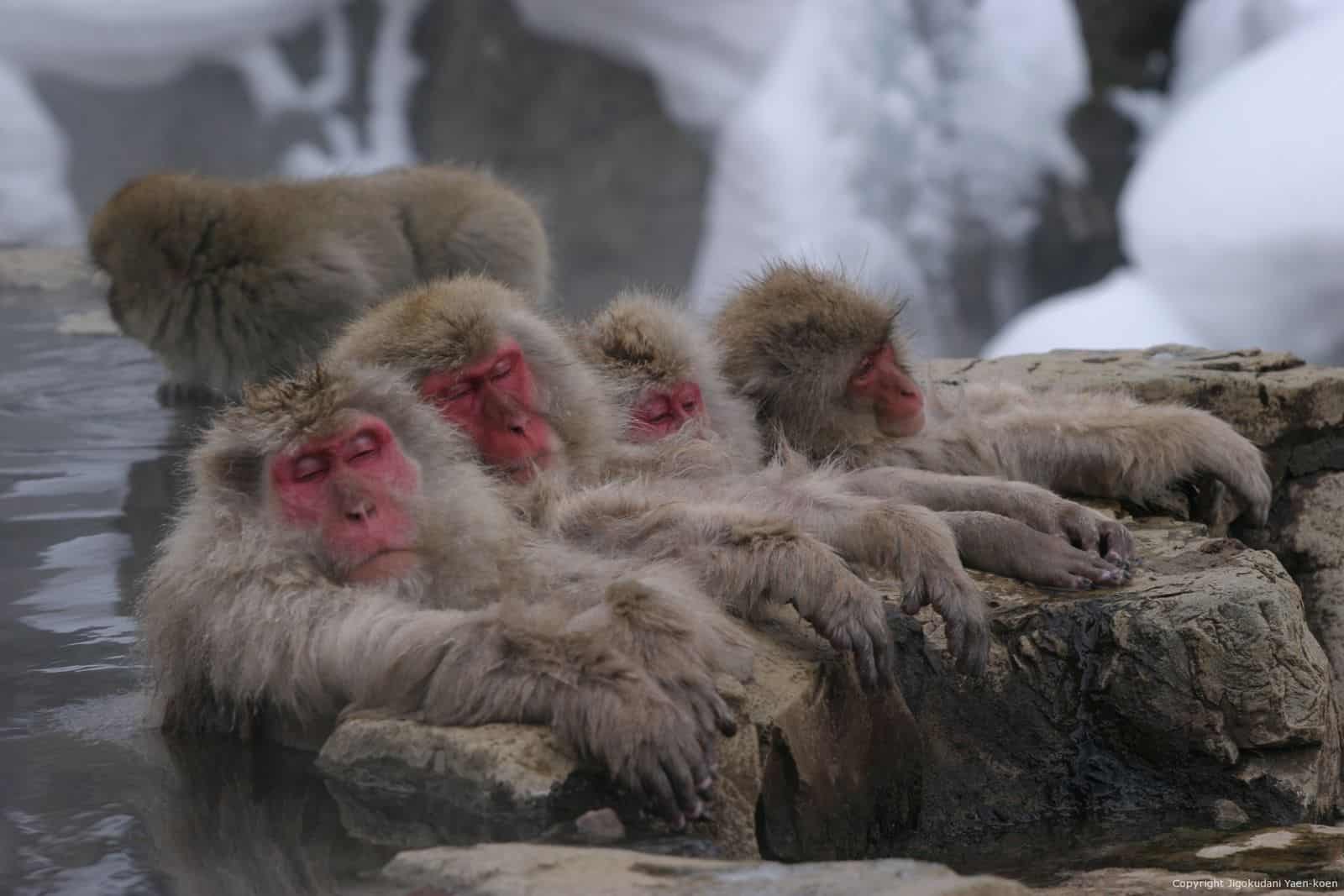
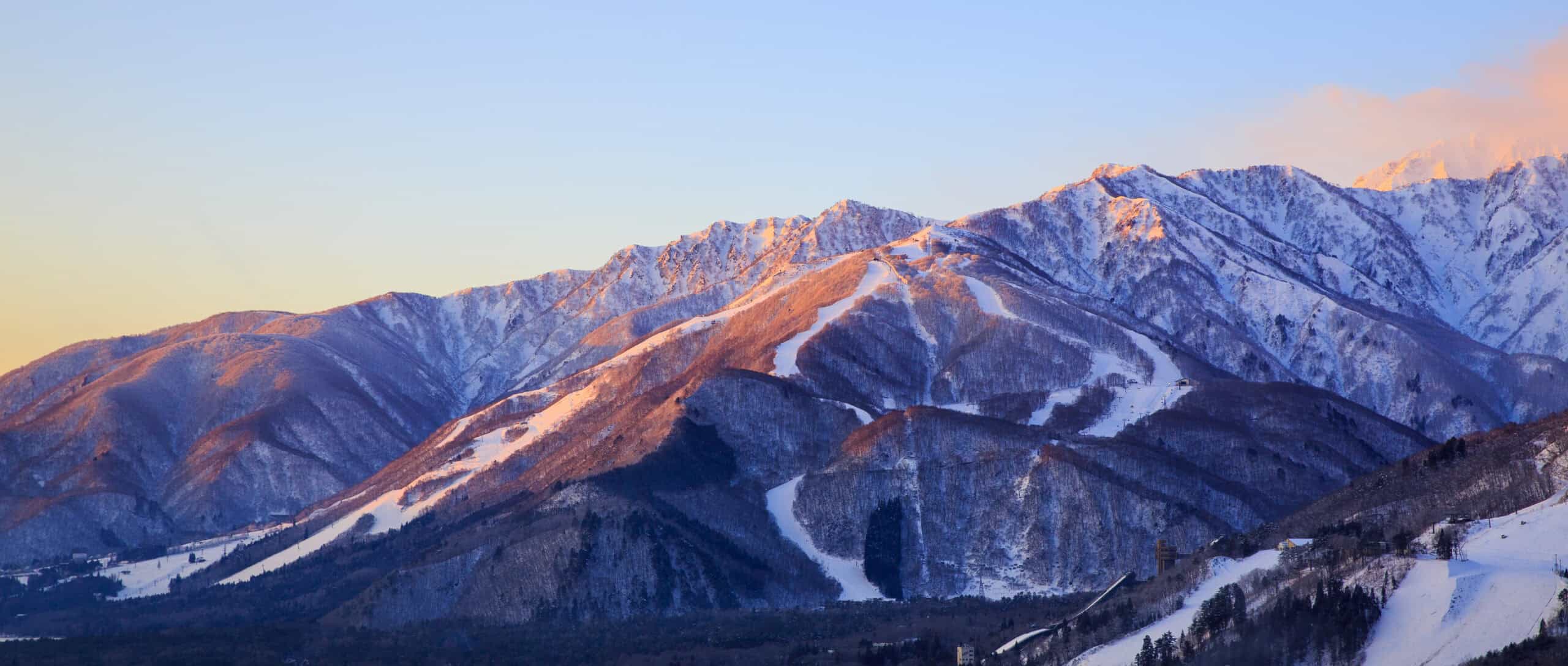
Hakuba is one of Japan’s best known ski destinations, but there’s plenty to do beyond the slopes. One of the most popular winter day trips is Jigokudani Monkey Park, where wild Japanese macaques gather around a natural hot spring in the mountains of Nagano.
The monkeys are famous for bathing in the hot spring during winter, especially on cold and snowy days. The park is around 90 minutes from Hakuba by road, followed by a forest walk to reach the viewing area, making it easy to fit into a full or half day.
If you’re considering a snow monkey tour from Hakuba, this guide covers the practical details: pickup locations, travel time, how much walking is involved, what to wear, what to expect at the park, and what you should know before booking.
Departure and Pickup
Our partnered tour departs from five pickup points around Hakuba: Tsugaike (weekdays only), Wadano, Happo, Echoland, and Goryu. Staff wearing black jackets check guests in at the main stops, while Tsugaike and Goryu travelers are guided by flagpoles and the bus driver directly.
Jigokudani Koen “Hell Valley Park”
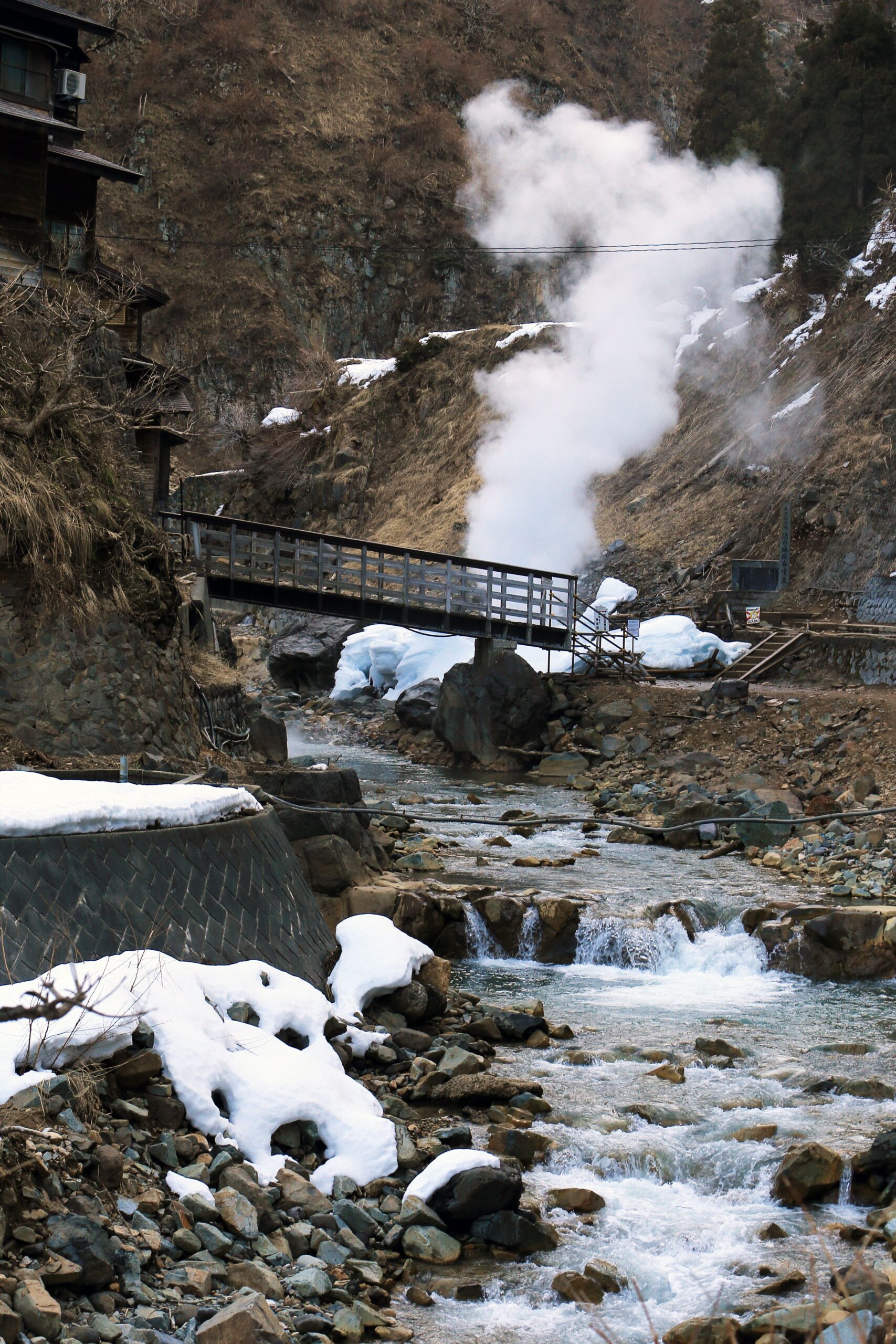
Named for the volcanic activity that powers the hot springs in the area, wintertime in the park is a site. Set in a beautiful valley forest with incredible mountain views, Jigokudani Koen especially shines in the snowy season.
While visitors here will have access to some of Japan’s most beautiful forest views, the main attraction is of course the hot spring monkeys. The monkeys stormed onto the world stage in 1970 after the park was profiled on the cover of Life magazine. Since then, their popularity has continued to grow around the world.
Visitors must walk 25-40 minute through a beautiful snow-covered forest trail before reaching the hot spring area. The trail is well marked and you’ll see plenty of other travelers so you won’t get lost. Dress warmly, wear appropriate footwear, and enjoy the nature walk.
The Monkeys
After finishing up your walk, there will be an office selling tickets for ¥800 and from there you are ready to meet the monkeys! If you book the guided tour in advance, you can skip the ticket line entirely, which can save a lot of time during peak season when the wait stretches long. Otherwise you’re welcome to wait in line and buy the ¥800 tickets yourself at the office. The monkeys congregate primarily in and around the hot spring but there will be opportunities to take pictures of them in various locations throughout the viewing area.
Insider Tip:
The monkeys have grown accustomed to being around people but are still wild animals; it’s best not to get too close and you should never try to touch them.
The Hot Springs
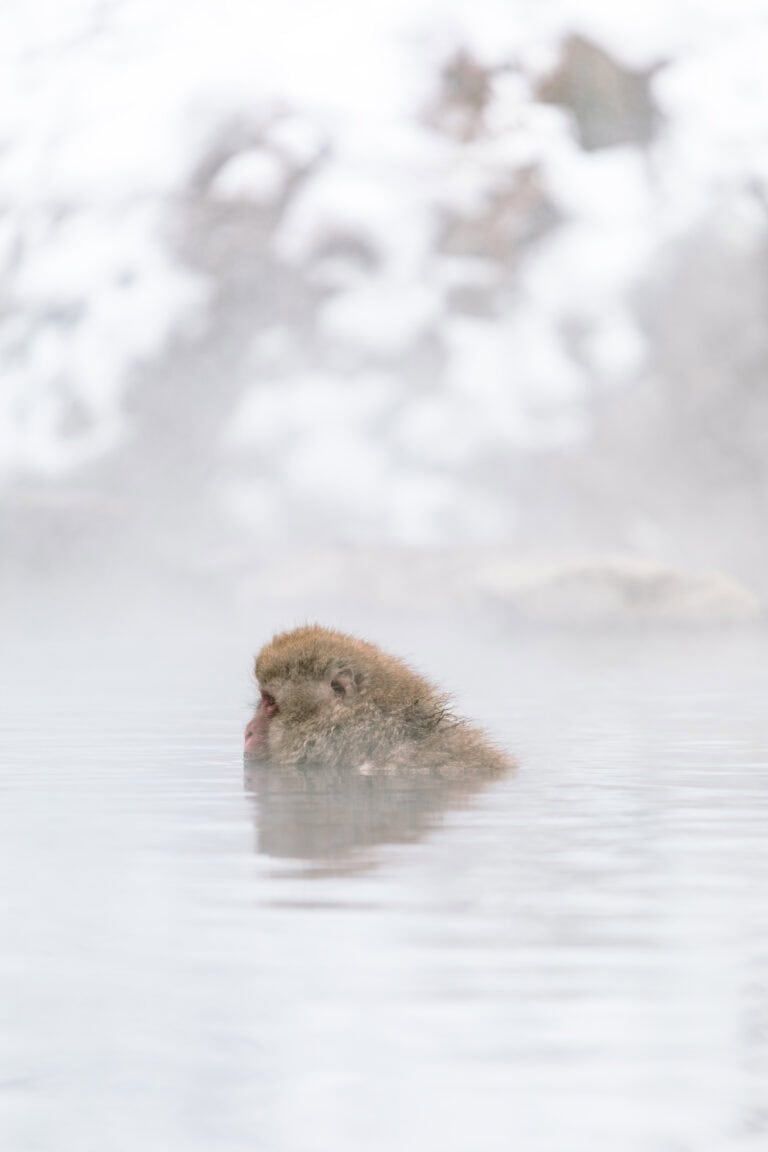
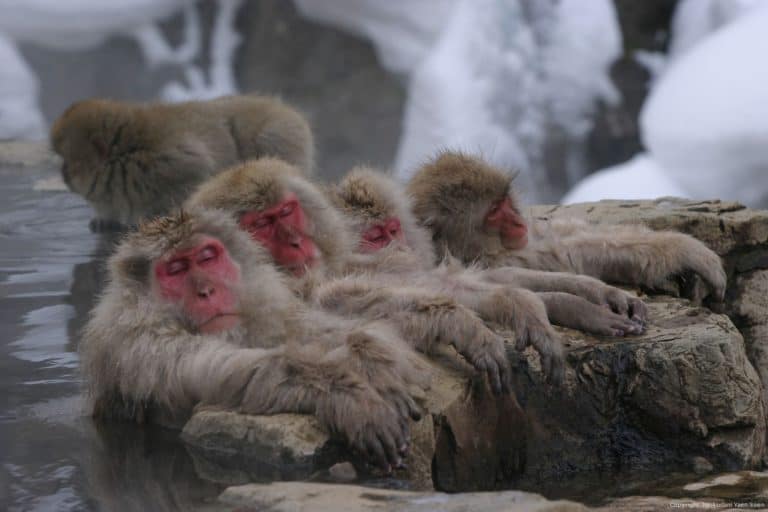
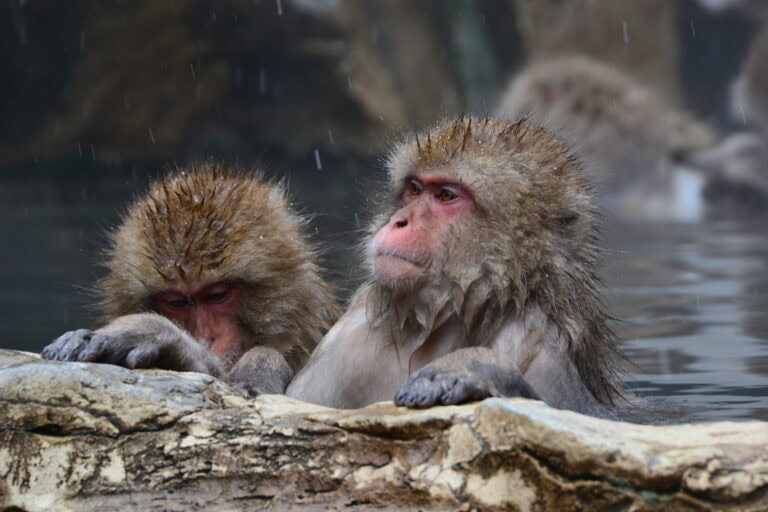
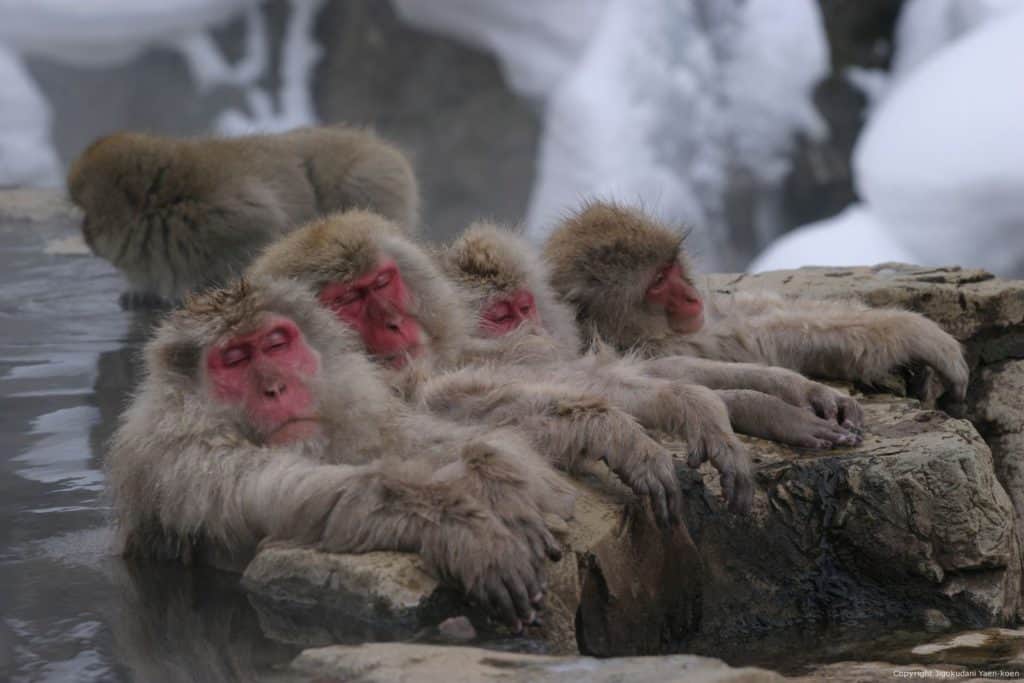
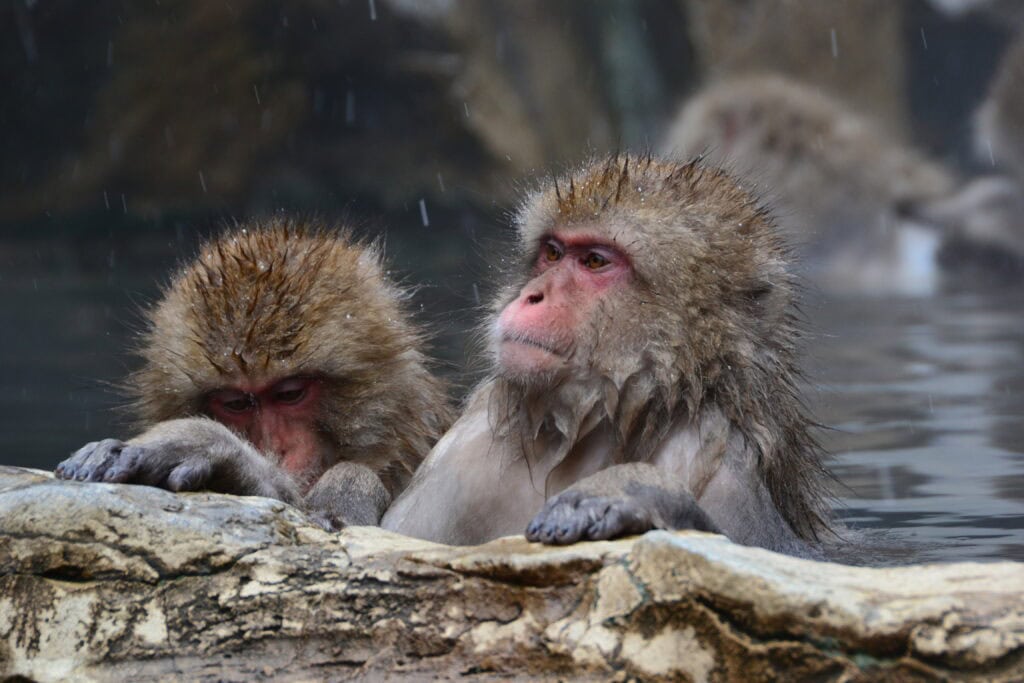
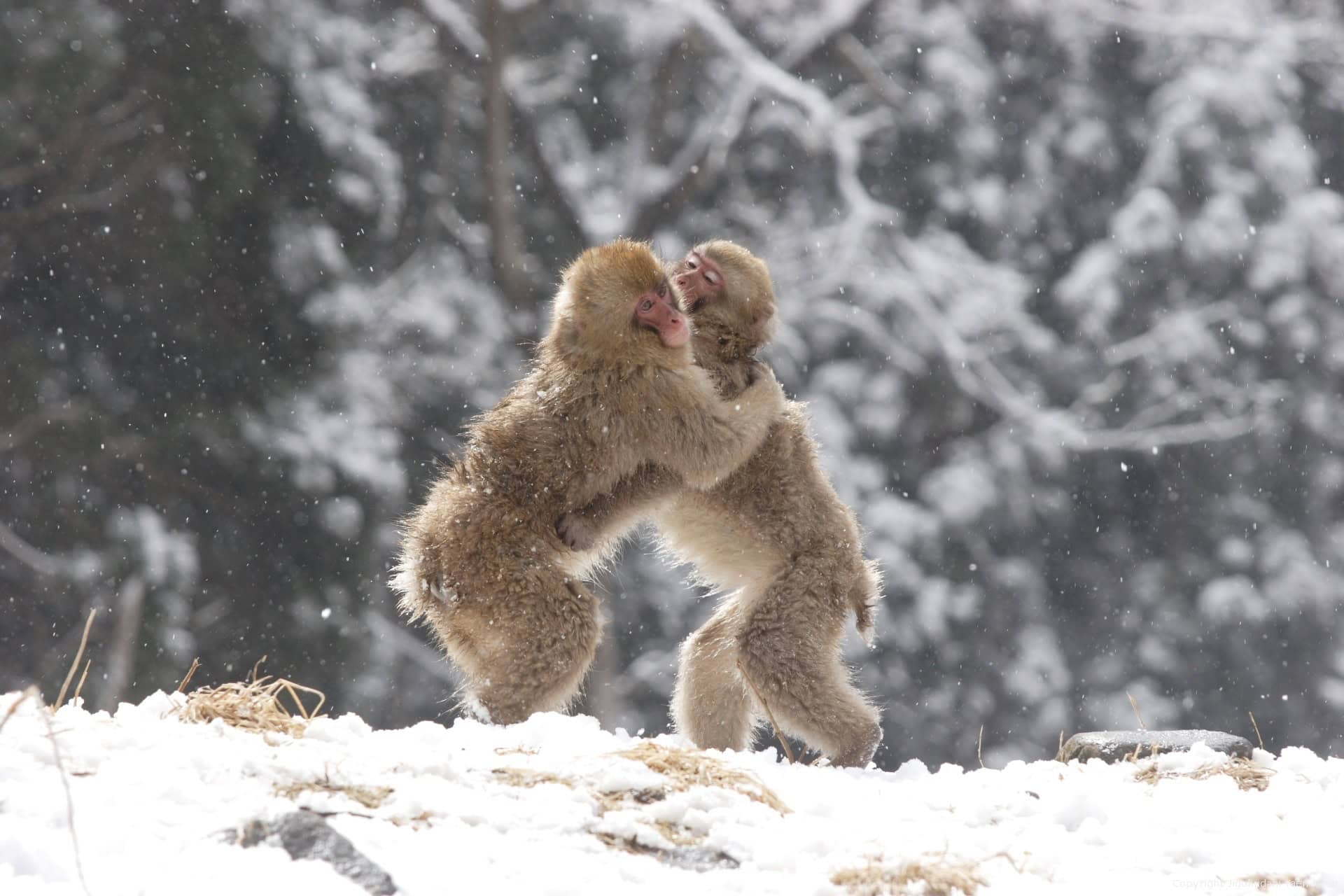
The Japanese Macaques bathe in the hot springs year round, but are naturally most photogenic against the wintery background. It’s not uncommon to see the monkeys cleaning each other in the bath or to witness baby monkeys playing in the snow before jumping in the warm pool.
The Troup
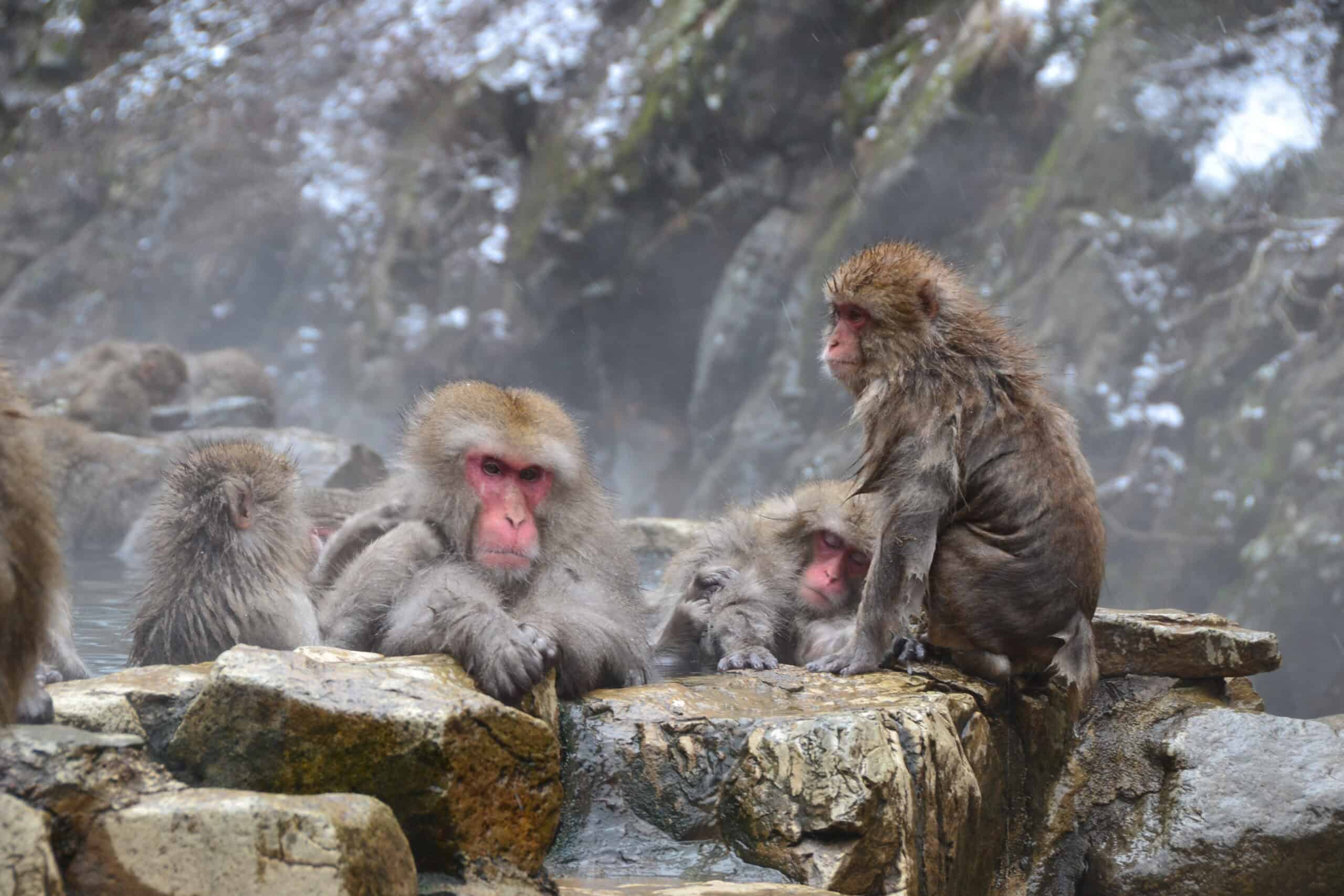
The troup of monkeys that frequent the hot springs are primarily females and children but the troup is organized in a strict hierarchy led by a dominant male, Tomamu 96 (born in 1996). Significantly larger than the other monkeys, Tomamu 96 has a large scar across his face, and always eats first during feeding time. Keep an eye out for Tomamu 96, but don’t get too close!
Lunch in Obuse
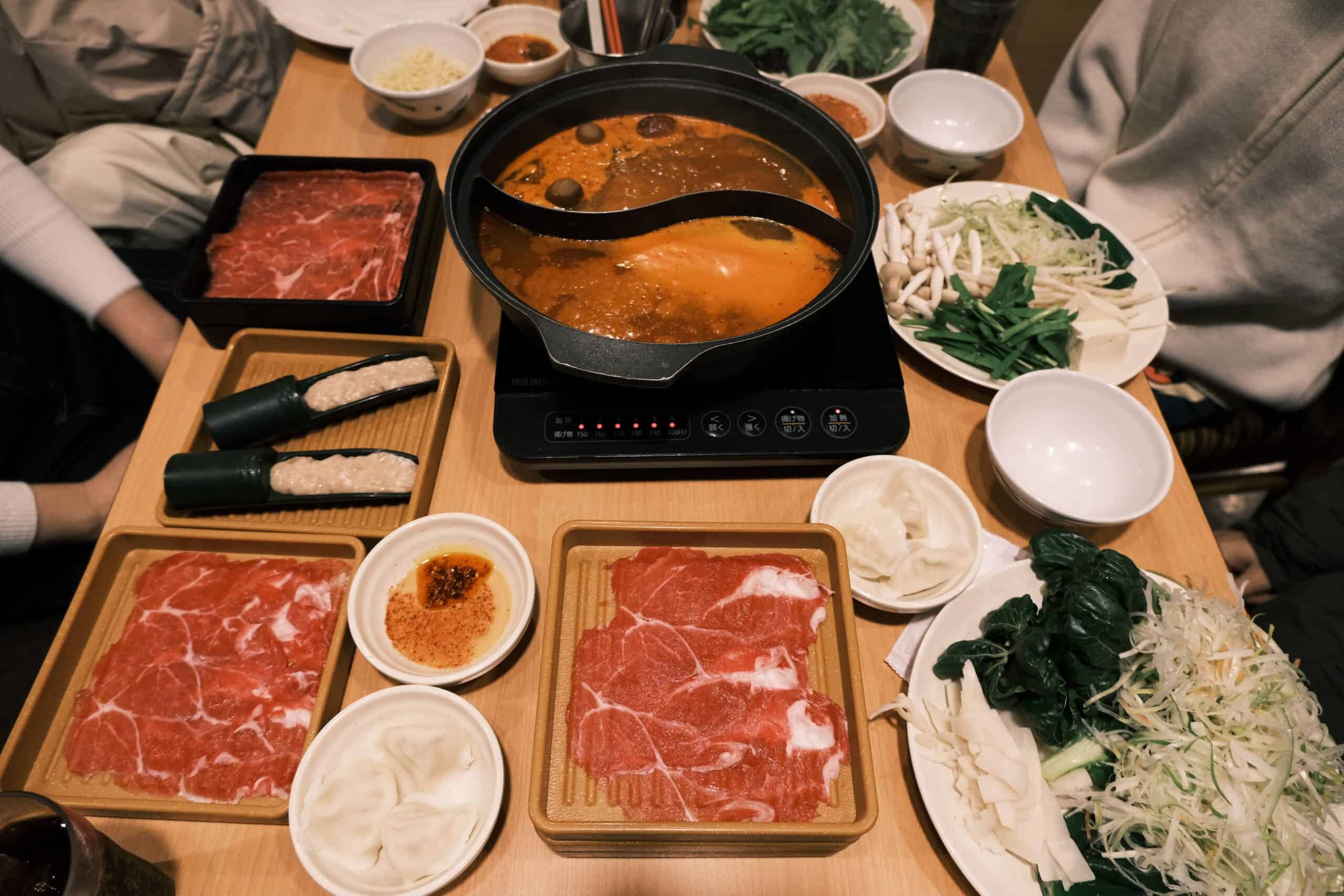
The tour continues to Obuse, a small historic town known for its art heritage and local produce, particularly chestnuts, shimeji mushrooms, and sake. Lunch is served at Kyoumitei, a local restaurant, roughly four hours into the tour. Adult meals center on a hot pot with a choice of beef, fish, or vegetarian broth, served alongside chestnut rice, pickled vegetables, salad, and soba tea. Dietary restrictions and allergies can be accommodated if flagged at the time of booking.
After lunch, guests get free time to explore Obuse’s shops and galleries. The town is home to the Hokusai Museum, dedicated to the ukiyo-e artist behind The Great Wave, as well as the centuries-old Masuichi Sake Brewery.
Zenkoji Temple
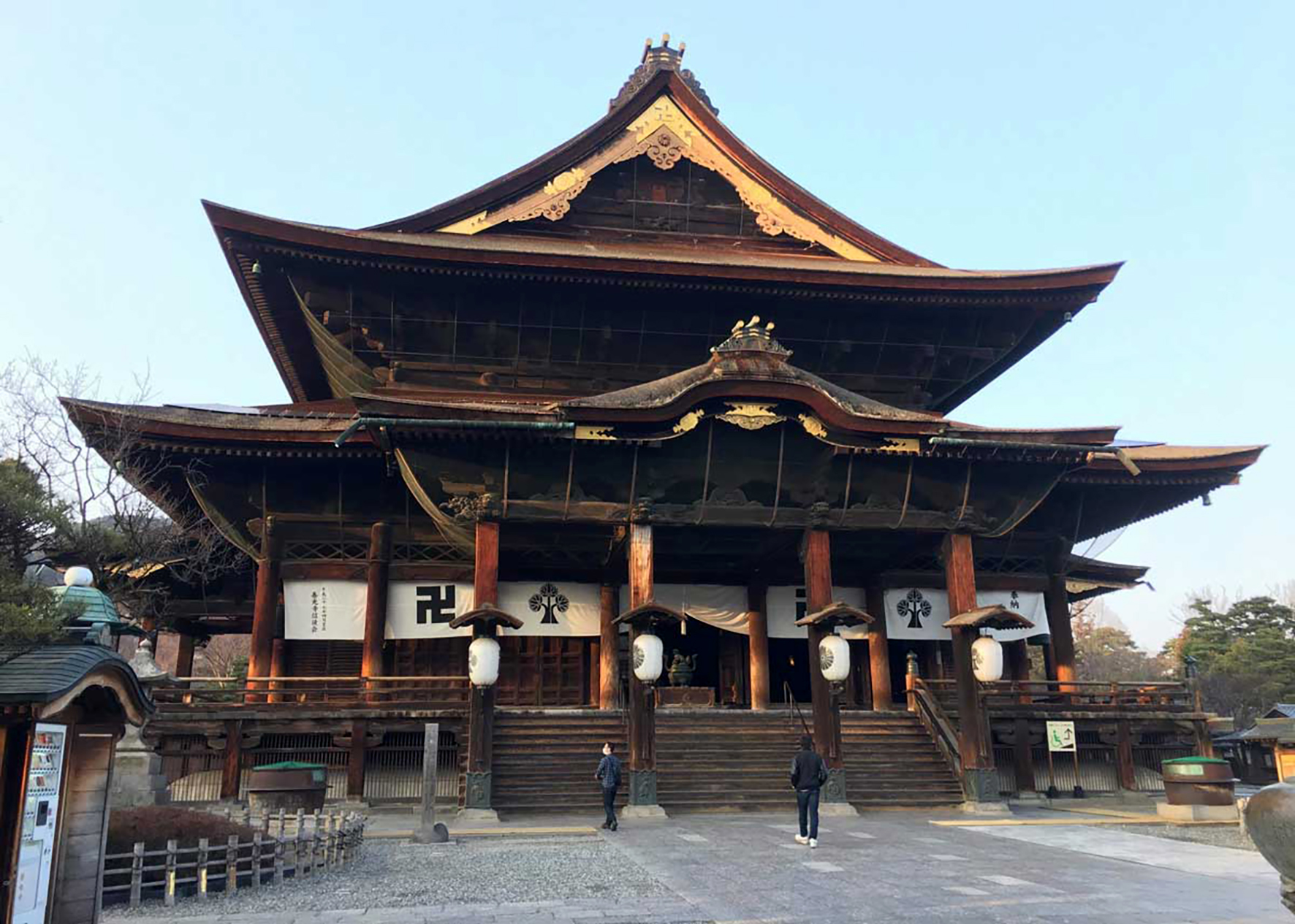
The final stop is Zenkoji Temple in Nagano, a Buddhist site with nearly 1,400 years of history. It’s believed to house the first Buddhist image ever brought to Japan, introduced in the 6th century, and has long welcomed worshippers across genders and sects, now surrounded by 39 sub-temples. A guided tour covers the temple’s history and cultural significance, and guests can opt into a pitch-black underground tunnel experience said to lead to a lock symbolizing the key to salvation, found entirely by touch. The surrounding streets are lined with lantern lit shops selling souvenirs, including the temple’s well known 7 spice blend.
The Return Trip
Drop off points match the original pickup locations, though guests can also request a stop near Nagano Station. Given the length of the day, breakfast beforehand and snacks on the bus are recommended.
Good to Know
- The tour runs daily (except January 1) from December 19 through the end of February, then Monday, Wednesday, Friday, and Saturday through March.
- Prices are ¥18,500 for adults and ¥12,500 for children (ages 3–11); infants under 2 ride free without a seat or meal.
- The tour isn’t recommended for guests with limited mobility and isn’t stroller or wheelchair accessible.
Guided Tours
If you’d like to join a guided tour please reach out through this form:
Still can not find what you searching for?
Popular
 English
  日本語
日本語  简体中文
简体中文